Content Marketing Has Changed: Here’s What’s Working in 2026
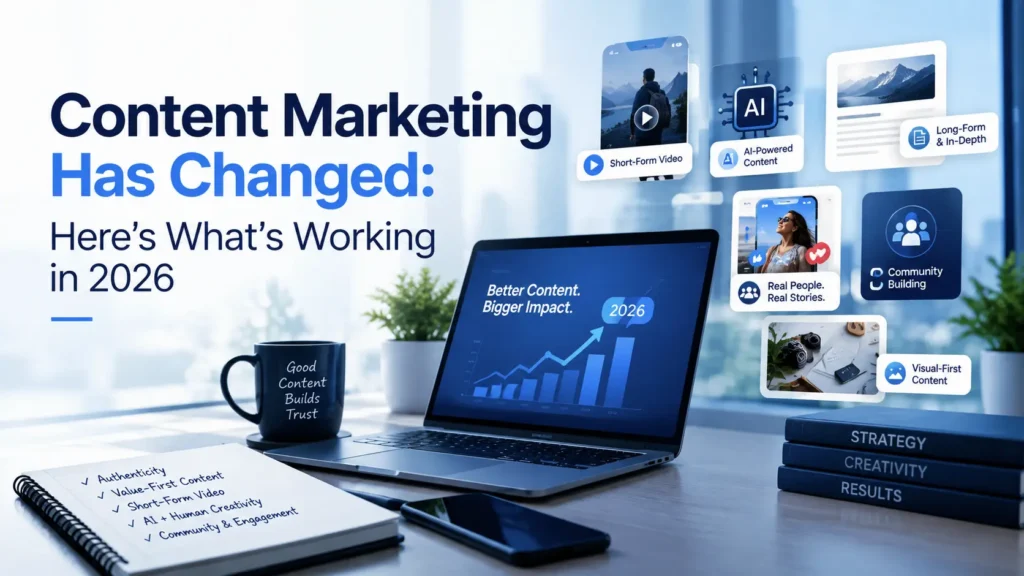
A couple of years ago, content marketing had a fairly simple formula. Write a blog post, sprinkle in some keywords, post it, wait for Google to send traffic. Post on Instagram three times a week, throw in some hashtags, hope for the best. That formula is basically dead now, and honestly, most brands haven’t fully caught up to that fact yet.What changed isn’t just the platforms or the algorithms. It’s how people find information in the first place. And if you’re still running the old playbook, you’re probably wondering why your numbers have quietly been sliding even though you’re doing everything you did last year.
Let’s talk about what’s actually working now.
Volume stopped being the flex it used to be
There was a stretch of time where publishing constantly was the whole strategy. Five blog posts a week, three reels a day, an email every other day. More content, more chances to get seen, right?
Not anymore. With so much content online, and a lot of it clearly AI-generated and thin, audiences and algorithms alike have gotten a lot more selective. A handful of genuinely strong, well-researched pieces now outperform a flood of average ones. Brands that have shifted from “publish constantly” to “publish less, but make it count” are seeing better results with less effort, which is honestly the dream.If you’ve been stressing about hitting a content calendar quota, this is your permission slip to slow down and focus on quality instead.
Video is no longer optional, but it's not just for entertainment anymore
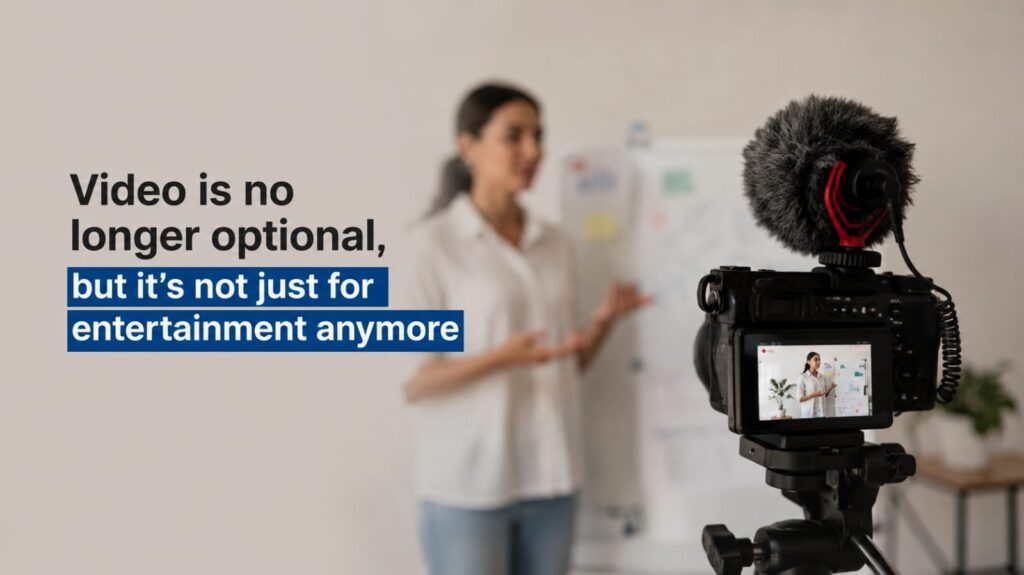
Short-form video isn’t new news. Everyone already knows Reels, Shorts, and TikTok-style content dominate attention right now. What’s shifted is why it matters.
Video content is increasingly showing up directly inside search results and AI-generated answers, not just on social feeds. That means a well-made explainer video or product demo isn’t just a nice social post anymore, it’s actually part of how you get discovered in the first place. Brands that treat video as a discovery tool, not just an engagement tool, are ahead of the curve.
The good news for smaller brands: this doesn’t require huge production budgets. A clear, well-lit video that actually explains something useful tends to outperform an overproduced ad that says nothing.
Trust has become the actual currency
Here’s something a lot of marketers are finally admitting out loud: algorithms decide what gets shown, but people decide what they trust. And trust doesn’t come from polish anymore. It comes from proof.This is why you’re seeing more brands lean into things like real customer reviews, behind-the-scenes content, founder-led videos, and honest case studies instead of glossy campaign visuals. People have gotten very good at spotting content that’s trying too hard to sell them something. What still works is content that shows real people, real process, real results.
This is closely tied to something search engines have started caring a lot more about too, basically the idea of showing the real humans and real experience behind a piece of content, rather than just well-written but faceless articles. Reviews, credible mentions, actual author names attached to actual expertise, all of this now carries real weight, both for people and for how content gets ranked and cited.
First-party data quietly became a huge deal
With third-party cookies mostly gone and privacy rules tightening everywhere, brands can no longer just buy their way into knowing their audience through ad platforms. The brands doing well now are the ones building their own direct relationships, email lists, WhatsApp communities, loyalty programs, anything that lets them actually know their audience without renting that knowledge from a platform.
This might sound like a technical, boring shift, but it has a very real creative consequence. When you own the relationship with your audience, you can create content that speaks directly to them instead of guessing what a broad algorithm-fed audience wants. That’s a much better place to create from.
Content has to work across more places at once
Search, social, video, community platforms, AI chat answers. These used to be separate boxes on a marketing plan. Now they’re really one connected system. A single strong piece of content, say, a well-researched article, needs to be able to show up as a search result, get pulled into an AI-generated answer, get chopped into a short video, and get discussed in a community space, all without losing its core value.
This doesn’t mean you need to be everywhere at once with separate content for every platform. It means the content itself needs to be strong and specific enough at the core that it naturally translates across formats. A weak idea doesn’t become strong just because you posted it on five platforms.
Thinking like a storyteller matters more than thinking like a publisher

There’s a noticeable shift happening from “how much can we produce” to “how good is the story we’re telling.” The strongest content marketers this year are blending data with actual creative instinct, pulling from formats like video, live events, and ongoing social series instead of treating every piece of content as a one-off.
This is a subtle but important mindset change. A publisher asks “what do we post today.” A storyteller asks “what’s the bigger story we’re building over time, and how does today’s content move that forward.” The second approach builds an actual audience relationship instead of just chasing daily engagement numbers.
So what should you actually change first?
If all of this feels overwhelming, don’t try to overhaul everything at once. Start here:
Audit your best-performing piece of content and ask honestly why it worked. Chances are it was specific and genuinely useful, not just well-designed.
Cut down your publishing frequency if you’ve been stretching yourself thin, and put that time into fewer, stronger pieces.
Add a short video version to at least your top few pieces of content. It doesn’t need to be fancy, just clear.
Start building one direct channel with your audience, an email list or community, if you don’t already have one.
Write like an actual human who knows the topic, not like you’re trying to hit a keyword count. That, more than any tool or trick, is what’s separating content that gets trusted from content that gets scrolled past.
Content marketing hasn’t gotten harder exactly. It’s gotten more honest. The shortcuts that used to work, keyword stuffing, publishing volume, generic AI-written filler, are fading fast. What’s replacing them is something a lot more human: real expertise, real proof, and content built to actually help someone, not just to get clicked on.
That’s a harder standard to meet. But it’s also a much better one.